Relaunching the RMetS East Anglia Centre

News / The RMetS East Anglia Centre

The Royal Meteorological Society East Anglia Local Centre is making a comeback! Two of our WeatherQuest forecasters (James Lester and Bernadette McCaffrey) are relaunching the Royal Meteorological Society’s (RMetS) East Anglia Centre this autumn. The Centre will meet 6 times a year, with topics aimed to meet a broad range of subjects from across meteorology and climate. Each meeting will be free of charge, and available to members and non-members. Professional meteorologists (working or retired), under- and postgraduate students, or members of the public with an interest in all things meteorology and climate, all are welcome!

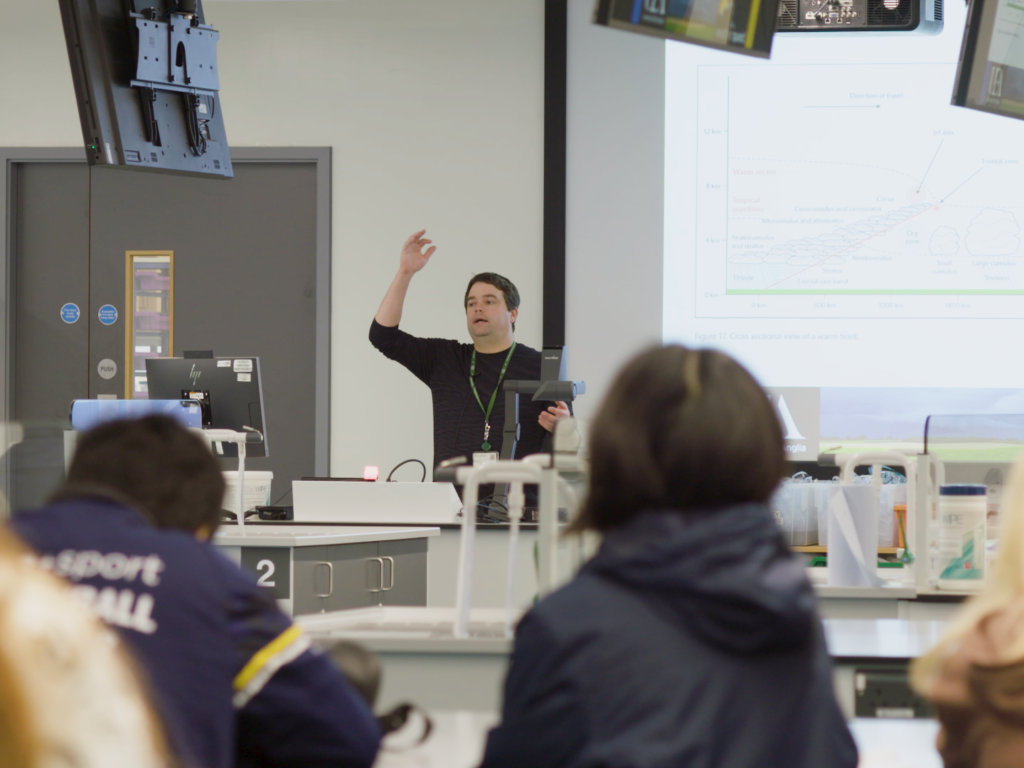
The first talk, hosted at the University of East Anglia’s Julian Study Centre on the 7th of October, is from our very own Chief Communication Officer – Chris Bell. The talk will focus on Storm Chasing in the American Great Plains, and what makes them so unique for producing such large storms and tornadoes. Despite residing here in the UK, Chris grew up in Texas and has made many a trip back to the USA to chase storms through the infamous “Tornado Alley” of the Great Plains. Chris will talk about his own experience in storm chasing, where, why and how people do it, and then delve into the science behind the storms, explaining how they are produced, and what time of year these large supercells/tornadoes normally occur. With his experience in forecasting, meteorology and storm chasing, it is looking to be a fascinating talk!

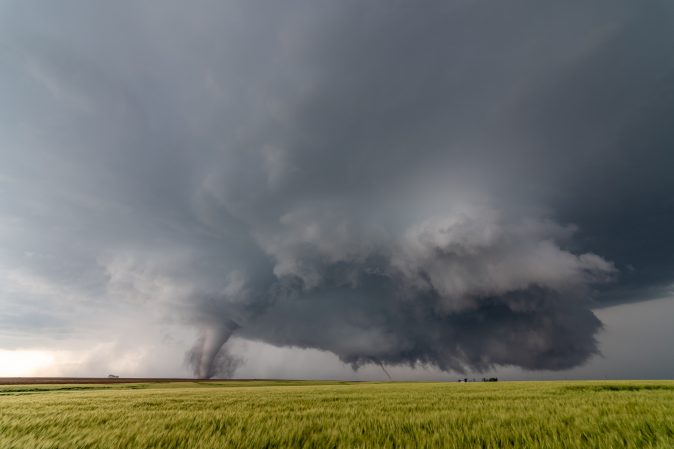
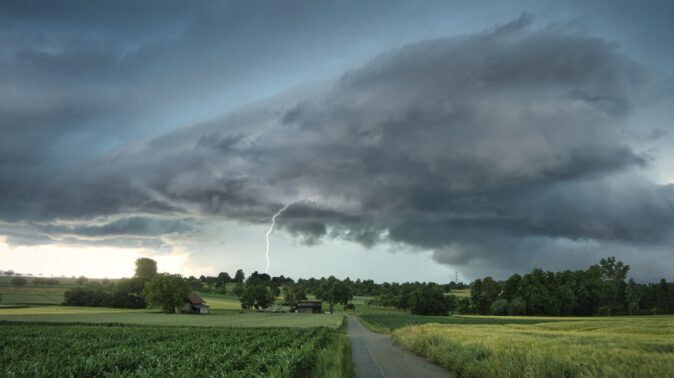
Tornado over a field in Kansas
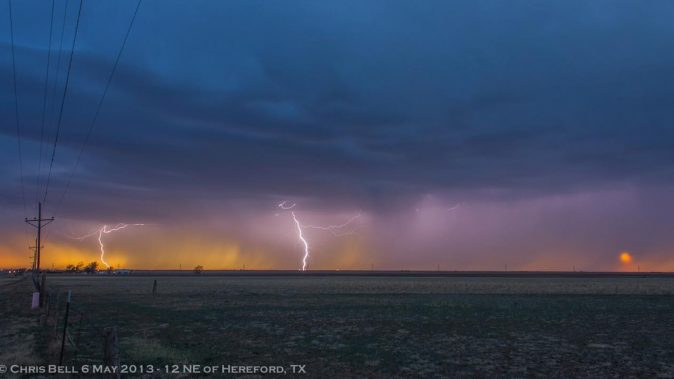
A large storm outside Hereford, Texas

To find out more and register for the event, please visit the event page on the RMetS website via this link. More events will be planned before the end of the year which will be announced in due course and added to the Local Centre’s webpage (see link below).

Thank you to James and Bernadette for putting in the work to bring regular meetings back to this local Centre. We are looking forward to see what else the RMetS Anglian Centre has in store!

To find out more about our Research and Development

Off to the EGU General Assembly!

News / The EGU General Assembly

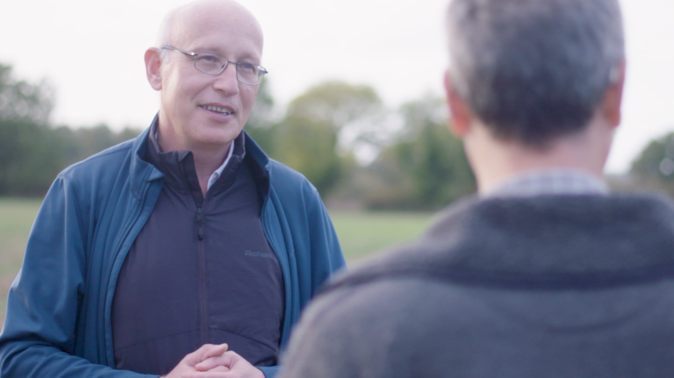
Dan Smith, Research Meteorologist, taking part in EGU General Assembly

Later this April one of our Research Meteorologists, Dr Dan Smith, will be heading to Vienna, Austria, to take part in the European Geosciences Union (EGU) General Assembly conference. The EGU is one of Europe’s leading organisations for Earth, planetary and space science research, and has over 19,000 members from across the continent. Publishing a wide range of journals and organising meetings, education sessions and outreach activities, they aim to advance fundamental research that addresses key socioenvironmental challenges.

Each year they hold a General Assembly, a large week-long conference which encourages members and non-members to take part in the different programme groups available. There are main disciplinary sessions which cover topics decided by each different scientific division, transdisciplinary lectures, debates, short courses as well as education and outreach workshops all on different days throughout the week. Two main subjects, Ocean, and Atmospheric Sciences are of interest to Dan who splits his time being a Research Meteorologist with WeatherQuest and being a Researcher at the University of East Anglia (UEA). Some of the sessions in these subjects include:

  • Numerical Weather Prediction, Data Assimilation and Ensemble Forecasting
  • From mesoscale Convection to Convective-Scale Predictions: Advances in Process Modelling, Observations, Data Assimilation and Machine Learning
  • Forecasting the Weather
  • Subseasonal-to-Seasonal Prediction, Processes and Applications
  • Modelling and Measuring Snow Processes Across Scales
  • Aviation Meteorology, Nowcasting and the use of UAS for Atmospheric Sciences
  • Precipitation: Measurement, Climatology, Remote Sensing and Modelling
  • Clouds, Aerosol, Radiation and Precipitation interactions
  • Oceanography at coastal scales: Modelling, Coupling, Observations and Applications
  • Observing and Modelling the Imprint of Meso- and Submesoscale Dynamics
  • Open Session on Coastal and Shelf Seas
  • Eddies, Waves and Instabilities: Observing, Modelling, and Parameterizing Oceanic Energy Transfers
  • Observing, forecasting, and projecting the Global Coastal Ocean (CoastPredict)

Aside from this, Dan is presenting a poster in the “Aerosol Emissions and Properties, Ice Nucleating Particles, Cloud Processes and Radiative Feedbacks: From Observations to Modelling” session, linking to his research at UEA. By having Dan on the ground heading to these sessions, it helps keep us up to date on the current science, gives us ideas on how we can improve all our services, and whether there are any areas of research we could investigate. We look forward to hearing what Dan will learn from this trip!

To find out more about our Research and Development service

UEA Meteorology Field Course

News / UEA Meteorology Field Course

UEA students head off to the Lake District!

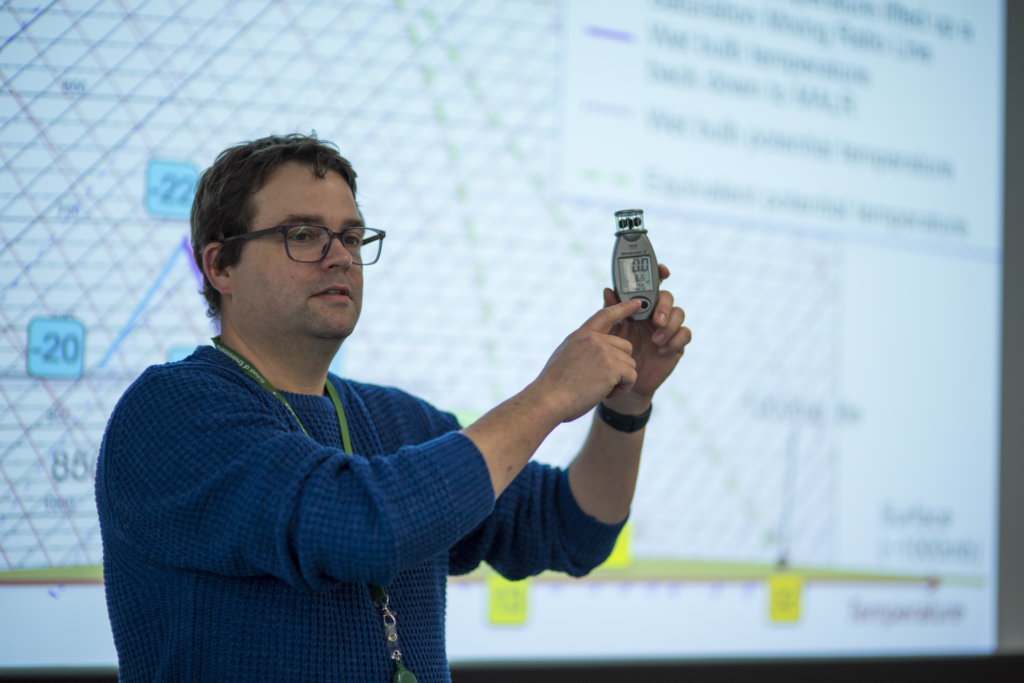
WeatherQuest has always had very strong links to the University of East Anglia and the School of Environmental Sciences (Env). Not only are we located on campus, many of our past and present employees are Env graduates and some are current members of the faculty, a lecturer and researcher. One such faculty member is our very own Chris Bell (CCO), who leads a module in Applied Meteorology for second year students. As part of the module, every year in mid-Spring Chris and the enrolled students embark on a week-long field course to the Lake District, with the main focus being the micro- and macro-meteorology of the area and Cumbria respectively.

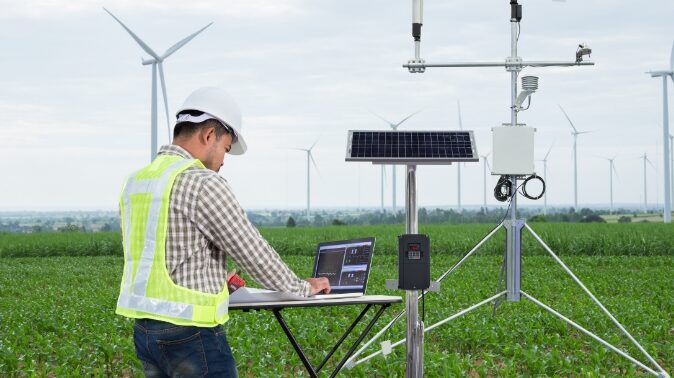
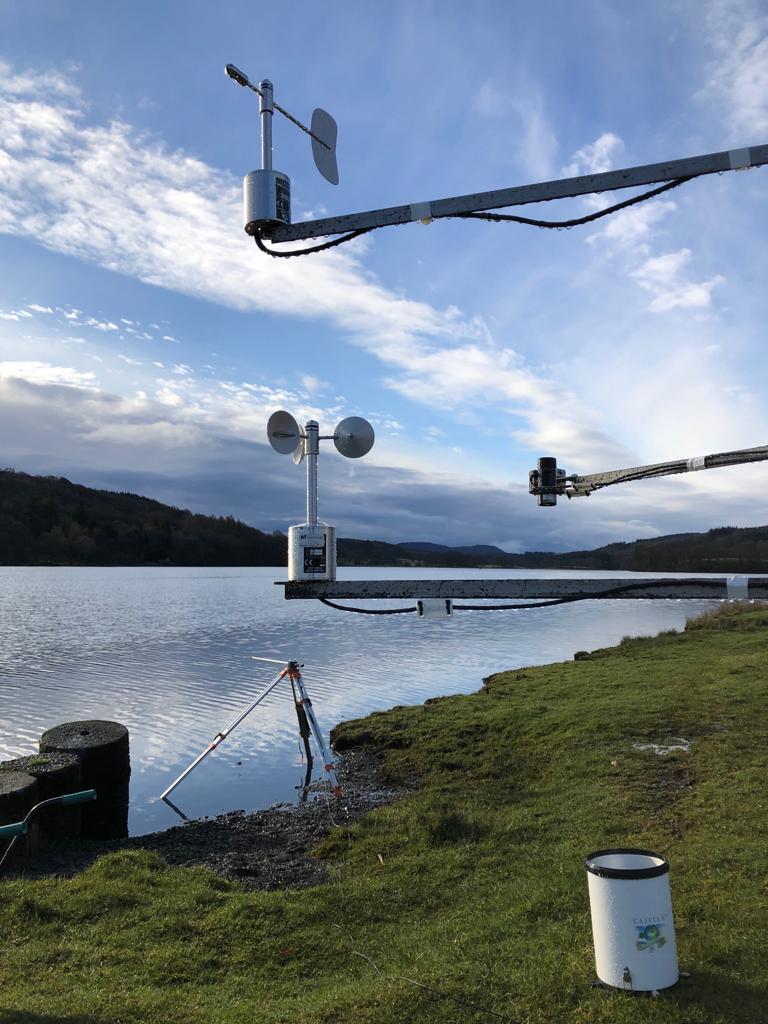
At the beginning of the week, the students record what the computer forecasts are for the synoptic situation over Cumbria for the week, taking note of any changes and the general weather for each day (max and min temps and wind speeds etc). They then erect a weather mast in a location carefully chosen for its interesting micro-meteorology (e.g. downwind of a hill). This mast has an array of meteorological equipment attached, including solarimeters, wind vanes, anemometers and thermometers, with their measurements all being logged and recorded.

Throughout the rest of the week the students complete different meteorological activities, ranging from manual weather data collection (using hygrometers and anemometers), cloud observation exercises, launching a weather balloon, drone flying and met office station or other site visits. This year, it is planned that the site visit will be a walking tour of Keswick with the Environment Agency, talking about flooding and its impacts in the area. As the lake district is one of the wettest areas in the UK, flooding is a major issue in the national park and those who live in it. At the end of each day, the students then take part in a weather briefing, whereby they look at the current synoptic situation, forecast models and any weather warnings to create a presentation that they present to the rest of the cohort.

At the end of the week, the students collate the synoptic data from the week along with their logged weather mast micro-meteorology data in preparation for their assessments following the trip. Then on the final evening before heading home the next day, they take a well needed trip to the local pub, rounding the whole week off.

When home, the students then spend time completing their assessment. The first part involves comparing how well the forecasts at the beginning of the week matched the synoptic change experienced. They can then use this information to help with the second part, exploring how the micro-meteorology changed throughout the same period. They do this by completing complex calculations from the weather mast measurements, finding variables such as turbulence, sensible and latent heat flux and net radiation. They then relate this micro-meteorology to the synoptic changes (e.g. a cold front pushed through the lake district, causing the temperatures to drop along with a reduction in solar radiation).

Not only is this trip incredibly fun and informative for the students, but it also does help prepare them for a job in the world of occupational meteorology, which is very beneficial. Chris is looking forward to this year’s trip, with his fingers crossed for some interesting weather to occur!

To find out more about our Research and Development service